AI investment doesn't create value on its own because a capability bolted onto an unchanged workflow just makes the old, broken process faster at being broken. The payoff shows up only when an organization redesigns how the work itself gets done — who owns which decision, what gets automated, and where human judgment stays load-bearing — not when it buys a new tool and asks people to use it inside the same process they already had.
Amina Haddad found this out the expensive way. As VP of Revenue Operations at a mid-market industrial distributor headquartered in Dubai, she had spent eighteen months as the executive sponsor of what the board minutes politely called "the AI initiative" — three different point tools, a forecasting add-on, an AI note-taker every rep was supposed to run on every call. Adoption numbers looked fine in the monthly dashboard. Pipeline accuracy didn't move. Rep churn, if anything, ticked up. She had bought the tools. She had not touched the job.
"We kept asking 'which tool should we buy next' when the real question was 'what should a rep's Tuesday actually look like now that half the busywork can run itself.' Nobody had answered that question. We'd just been layering software on top of the same Tuesday."— Amina Haddad, VP of Revenue Operations

Tools Don't Transform — Workflows Do
The AI note-taker Amina's reps were using is a fair example of what individual-tool adoption looks like from the inside. It transcribed calls well. It even produced a passable summary. But nothing downstream of that summary changed — a rep still had to read it, decide what mattered, copy the relevant bits into the CRM by hand, and set their own reminder to follow up. The tool did one step of a nine-step workflow and left the other eight exactly as manual as they'd always been. Net time saved per deal: close to zero. Net dashboards purchased: one more.
That's the pattern behind most AI initiatives that stall at "we bought it" instead of reaching "it changed how we work." A tool answers a narrow question — can a machine draft this email, summarize this call, score this lead — while the workflow around it keeps asking a human to do everything else exactly as before, just now with an extra piece of software to check. Value isn't created by the model getting smarter. It's created when the steps around the model get removed, reassigned, or rebuilt from zero.
From Individual Adoption to Org-Wide Reinvention
Amina's turning point came from a blunt observation in a QBR: her two best reps had quietly built their own personal workaround — a shared spreadsheet and a WhatsApp habit that let them skip most of the CRM entirely, because doing the work the "AI-enabled" way was still slower than doing it their own way. Individual adoption had happened. It just wasn't happening inside the system she'd invested in. Her best people were the most efficient AI adopters in the building, and they were adopting it around her stack, not through it.
That's the gap between adoption and reinvention. Adoption is measured seat by seat — how many reps logged in, how many calls got transcribed, how many drafts got accepted. Reinvention is measured at the level of the operating model — did the shape of the job change for everyone, not just the two reps resourceful enough to route around a bad process on their own. An organization can hit 90% individual adoption and zero organizational transformation at the same time, and for eighteen months, that's exactly what Amina's dashboard was quietly telling her.
Redesigning the Revenue Operating Model Around Agents
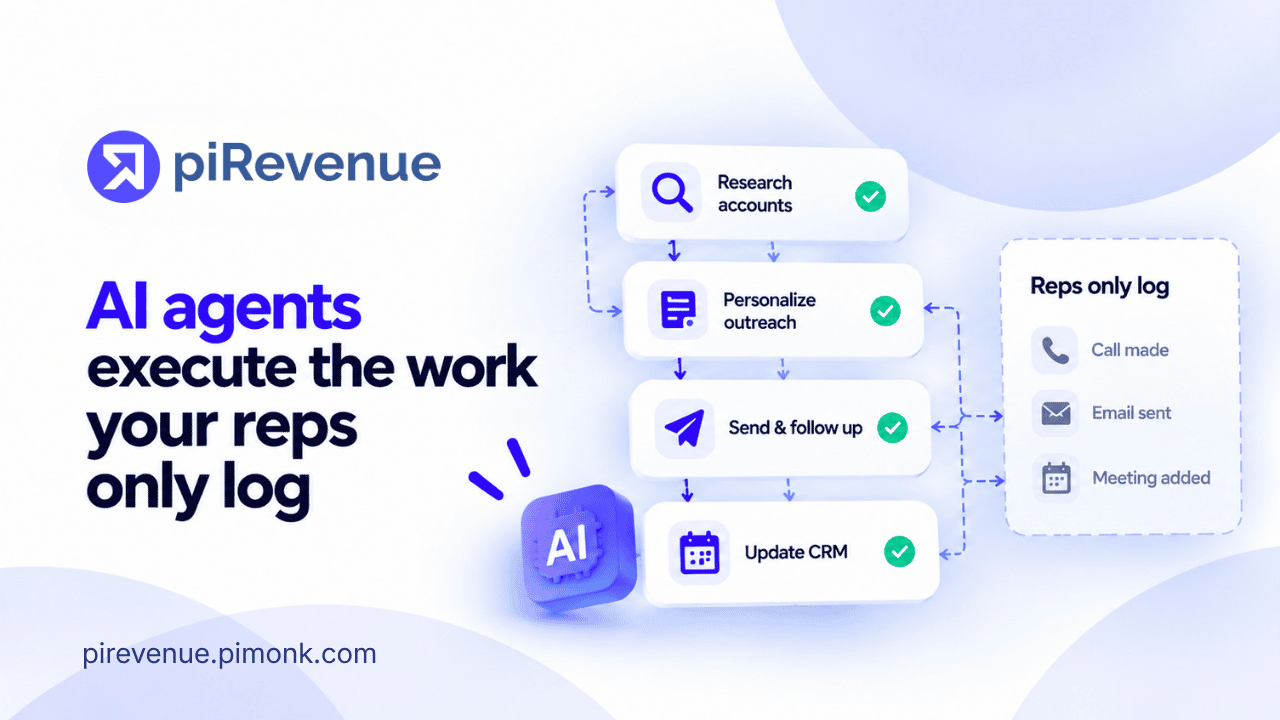
The rebuild Amina ran with her team didn't start with a vendor list. It started with mapping every step in a deal's life — from first contact to signed contract — and sorting each step into one of two columns: work that requires human judgment about another human being (negotiating, reading a room, deciding whether to push or wait), and work that requires accurate reconstruction of what already happened (logging what was said, flagging what's gone quiet, updating a number that should already be correct). The first column stayed with reps. The second column moved to agents, by design, not by accident.
That sorting exercise is the actual redesign — the tool selection came after, not before. In practice, it looked like this:
- Map the deal workflow end to end — every step from first touch to close, named explicitly, not assumed.
- Sort each step — human judgment, or faithful reconstruction of fact. No third category.
- Reassign ownership — reconstruction steps go to agents; judgment steps stay human, with agents feeding them better inputs.
- Rebuild the manager's job — from auditing records to coaching the calls the records now surface automatically.
- Re-measure the org, not the tool — track cycle time and forecast accuracy at the team level, not login counts at the seat level.
Once the busywork column moved, the CRM itself changed function. It stopped being a form reps filled in and became a record agents built from the calls, threads and notes that already existed — the system serving the rep's actual selling motion instead of demanding a separate one.
Leadership Practices for an Agentic Org
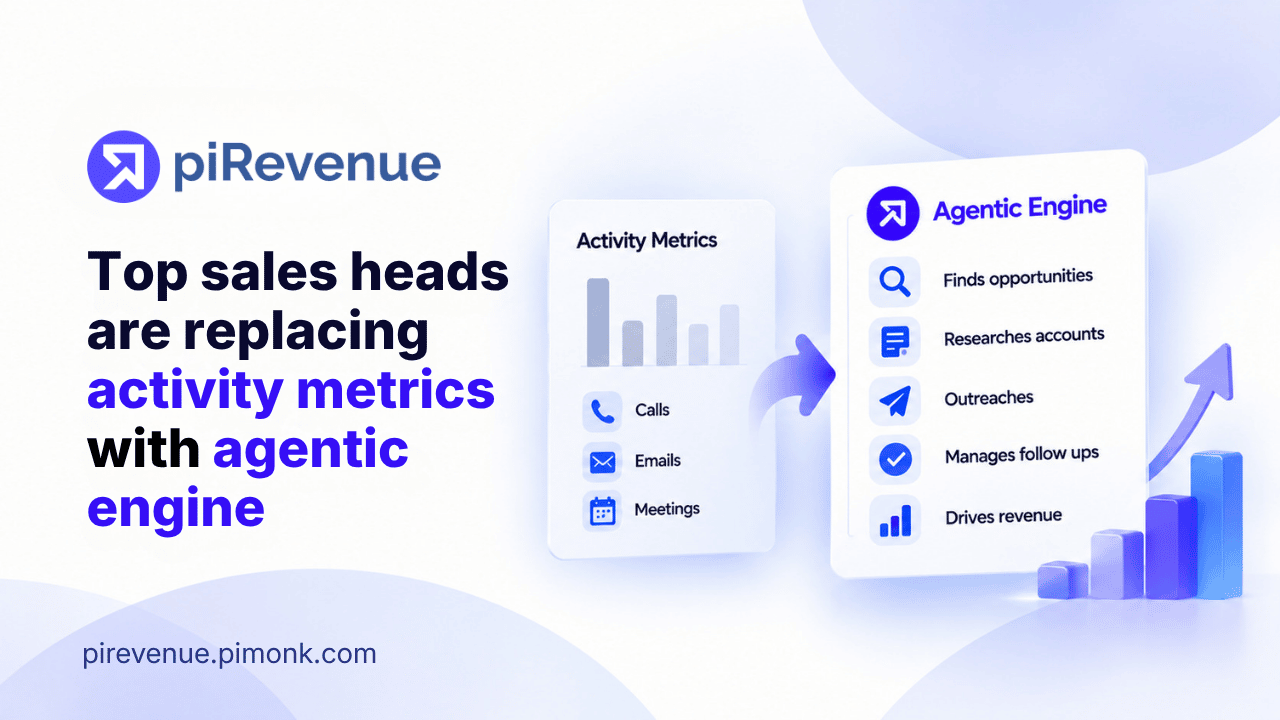
The hardest part of the rebuild wasn't technical — it was Amina's own job description. For years, "managing the pipeline" meant chasing reps for updates and auditing records for accuracy. Once agents kept the record current automatically, that entire category of management work simply stopped being necessary, and Amina had to decide what she was going to do with the hours it freed up. She moved them into call coaching and deal strategy — sitting in on the negotiations that were genuinely stuck, instead of policing the ones that were merely under-logged.
Leadership in an agentic org looks less like enforcing tool adoption and more like continually re-drawing the line between reconstruction and judgment as the organization learns where agents can be trusted further. Amina now runs a standing thirty-minute review each month with her ops lead: which steps are agents handling well enough to expand, which ones still need a human check before they're trusted, and which "judgment" tasks turned out, on inspection, to be reconstruction wearing a judgment costume. That line moves. Leadership's job is to keep moving it deliberately, instead of letting it freeze the day the tool got installed.
Where Humans Stay in the Loop
None of this is a case for automating the sales floor into silence. The negotiation, the read on a hesitant buyer, the decision to walk away from a bad-fit deal, the actual moment of closing — that's the part of the job that generates revenue and the part no agent at Amina's company touches unsupervised. Every agent-drafted follow-up still goes out with a rep's name on it, reviewed before it sends. Every forecast number still gets a human sanity check before it reaches the board. The design principle Amina now repeats to every new hire is simple: agents own the reconstruction of what happened, humans own the decision about what happens next.
That line is also why the transformation held past the pilot phase, where so many AI initiatives quietly die once the initial excitement fades. Reps didn't experience it as being replaced — they experienced it as finally being handed a job that matched the job description. The busywork left. The selling stayed, and got bigger.
Stop feeding your CRM. Let the agents do the busywork.