Somewhere right now, a good salesperson is closing a call with a buyer, feeling the small private satisfaction of a deal that just moved forward — and then opening a CRM tab to describe, in a dropdown menu, what just happened between two human beings. Stage: Qualified. Next step: free text, 200 characters, please. Probability: your best guess, entered by hand, about a number a system should have known already.
This is the job we need to talk about. Not "sales" — selling is fine, selling has always been fine, selling is one of the oldest and most human things people do for a living. The job we mean is the one that got quietly stapled onto selling over the last twenty years: data entry. Structured, repetitive, unpaid, unglamorous data entry, performed by people who were hired, trained and compensated to do something else entirely.
The job was never "sell, and also be a data-entry clerk on the side." Somebody just stopped noticing where the first job ended and the second one began.

The Job That Ate the Job
Nobody designed this on purpose. No VP of Sales sat down and decided that a great closer in Lagos, Dubai or Bogotá should spend two hours a day typing what a client said into fields a system administrator configured three years ago. It happened by accretion — one field at a time, one "just log it so we have the data" at a time, until the CRM stopped being a place that helped the seller and became a place the seller had to feed, daily, or be flagged for low "adoption."
Adoption. That word is worth sitting with. It became the metric that mattered — not deals closed, not relationships built, but whether a rep dutifully typed things into boxes. A brilliant closer who forgot to log a call was a compliance problem. A mediocre seller who logged everything on time was a model citizen. The tool built to serve the salesperson had, somewhere along the way, put the salesperson in service of the tool.
Go looking for the moment this started and you won't find a single villain, just a long chain of reasonable-sounding decisions. A sales leader wanted visibility into the pipeline, so a field got added. Finance wanted cleaner revenue recognition, so another field got added. Marketing wanted attribution data, so a third. Each addition made sense in isolation, defended by someone with a legitimate need for the data. What nobody defended, at any point in the chain, was the seller's time — because that cost was invisible on the requesting department's budget. It only showed up, quietly, as fewer calls made and slower pipeline growth, and by the time anyone noticed, the form had forty fields and a mandatory close-reason dropdown nobody could explain.
A Eulogy, Not a Lament
We are not sad to see this job go. It was never a good job. It paid nothing extra, it required no selling skill, and it stole time from the only activity that actually generates revenue: a human talking to another human about a problem worth solving. Every hour spent constructing a clean record of a conversation was an hour not spent having the next one.
Directionally, a top-performing rep spends roughly a quarter of the week actually selling. The rest — logging, chasing, chasing the logging, fixing what got logged wrong — is the data-entry job wearing a sales badge. That ratio isn't a personal failing. It's what happens when a role quietly doubles without anyone renaming it.
What Actually Killed It
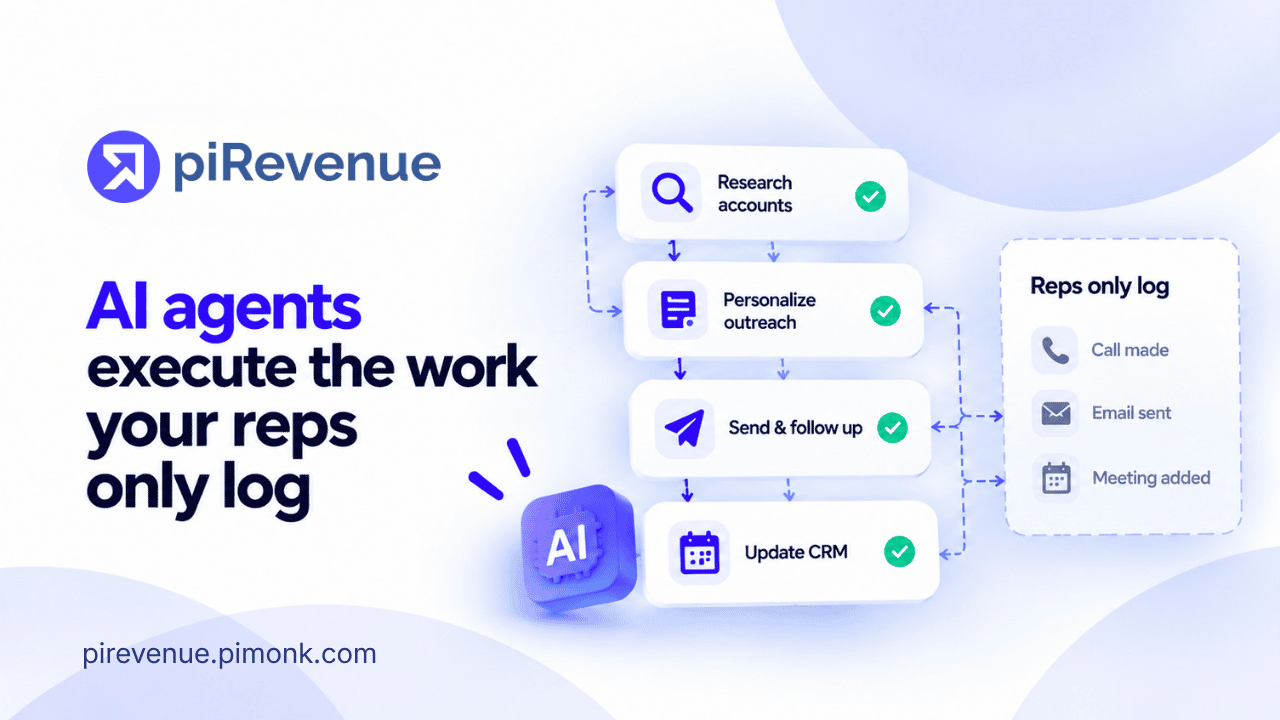
Not a mandate. Not a training program telling reps to "adopt the CRM" harder. What kills a job like this is removing the reason it exists — building the record automatically from the work a rep was already doing, instead of asking them to do the work twice. A call happens; an agent structures the deal from it. A message thread moves a negotiation forward; an agent updates the stage. A deal goes quiet; an agent drafts the nudge and hands it to a human to send. None of that requires a form. All of it requires the system to meet the seller where the selling actually happens — in conversations, not in dropdowns.
This is a deliberate design position, not an incidental feature. Software that pretends to sell for you is a gimmick and, in the wrong hands, a liability — buyers can tell, and trust erodes fast. Software that kills the clerical half of the job so the human half gets more oxygen is the only version of "AI in sales" worth building.
Who's Left When the Data Entry Dies
The seller is left. Just the seller — the part of the job that was always the actual job. Someone who reads a room, senses hesitation before it's said out loud, knows when to push and when to go quiet, and closes because a human trusted another human enough to sign. None of that gets automated, and none of it should be. piRevenue's whole architecture rests on a hard line: agents do the busywork, people do the deal. Every outbound word, every price, every commitment — approved by a person, every time.
That hard line matters more than it might sound like on first read. It would be technically possible to let an agent draft and send a follow-up unsupervised, or auto-approve a discount inside a pre-set range, and plenty of vendors will tell you that's the future. We think it's the wrong future for the markets we build for. A buyer in Nairobi or Karachi who gets a generic, agent-composed message with no human behind it notices immediately — and the relationship, which is the actual asset being sold, takes the damage. The line isn't caution for its own sake. It's the recognition that trust is the product, and trust doesn't transfer to software, no matter how well it writes.
The New Job Description
What's left, once the clerical layer is gone, is a smaller job description and a bigger one at the same time. Smaller, because "type it in twice" is no longer on the list. Bigger, because the hours that clerical work used to eat now belong to the actual craft — more calls, more relationships, more of the work that a machine still cannot do and, honestly, shouldn't try to. The data-entry salesperson is dying. What's replacing it is just... the salesperson. The one the job title always implied.
Stop feeding your CRM. Let the agents do the busywork.