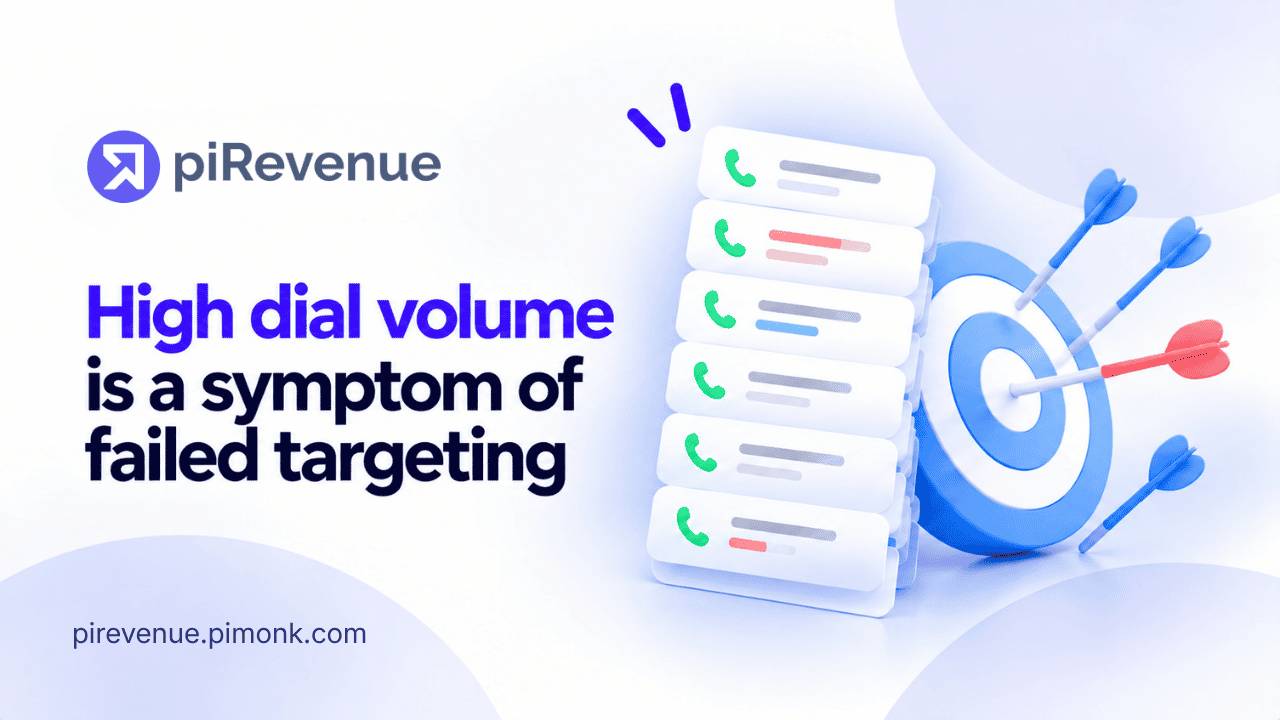
A sales team making 400 dials a day is not a productive team. It is a team that does not know who to call. High volume is what reps do when the list is bad, the ideal customer profile is vague, and the only instruction from management is "hit the number." The dials are not the strategy. They are what fills the gap where sales targeting should be. And the harder the team dials, the clearer it becomes that nobody upstream decided who was worth calling.
This post is for the sales heads, CFOs and CEOs who read dial reports and see effort. It argues that the report is showing something else. It covers why volume rises when targeting is weak, what a high-volume, low-conversion team tells a CEO, where targeting breaks down, what it costs per rep, and what fixed targeting looks like within a quarter.
Why does dial volume rise when sales targeting is weak?
Give a rep a list of 50 accounts that fit the product, have a live problem, and have a decision-maker whose name and role are known. The rep will make perhaps 15 calls a day. Each one is prepared. Each one has a reason. The rep is selective because selection is possible.
Give the same rep a list of 5,000 contacts pulled from a data vendor by industry code and headcount. The rep has no way to know which 50 matter. So the rep calls all of them, fast, hoping the right ones surface. Volume goes up. Conversion goes down. The rep is not lazy or careless. The rep is doing the targeting that management did not do, one dial at a time, at the most expensive point in the process.
Then management reads the dial report, sees 400 calls a day, and concludes the team is working hard. The number that should have prompted the question "why so many?" is read as proof that nothing is wrong.
What does a high-volume, low-conversion team tell a CEO?
First, the company has not decided who it sells to. A clear ideal customer profile produces short lists. A vague one produces long lists. If reps are dialling thousands of contacts, the profile is vague, whatever the slide deck says.
Second, the data is bad. Even a clear profile fails if the contact list does not match it. Stale titles, wrong companies, people who left two years ago. Reps burn through bad data by dialling more, because there is nothing else to do with it.
Third, the incentives are pointed at the wrong thing. If reps are paid or coached on dial count, they will dial. A CEO who sees high volume and low output should ask what the compensation plan rewards. The answer is usually right there.
The reps are the last link in a chain. High volume at the end of the chain means the earlier links did not do their job. Blaming the reps, or hiring more of them, adds cost without touching the cause.
Where does sales targeting actually break down?
In predictable places. A sales head can check each one in an afternoon.
- The profile: Written as a description of a company type, not a decision about who to pursue. "Mid-market technology firms" is a category. "Technology firms with 200 to 800 employees, a recent leadership change in operations, and no current vendor in this space" is a target.
- The data: Bought in bulk and never verified. Contact records with a 30 per cent error rate mean a third of dials are wasted before anyone picks up.
- Territory design: Reps given regions or industries with no account-level prioritisation. The territory is a pool, not a plan. Reps fish in it.
- The marketing handoff: Leads passed to sales because a form was filled, not because the account fits. Sales dials them anyway, because they are labelled leads.
- The signal layer: No use of intent data, hiring signals, funding events or technology changes. These narrow a list from thousands to dozens. Most teams have access to some of this and use none of it.
- The feedback loop: Nobody tracks which accounts converted and feeds that back into the profile. The list is the same shape every quarter, and so is the result.
How much is failed targeting costing per rep?
A rep making 80 dials a day, with a connect rate of 5 per cent and a meeting rate of 1 per cent from connects, produces roughly one meeting every three days. That is about 80 meetings a year. If the rep's fully loaded cost is $120,000, each meeting costs $1,500 before anyone has discussed the product.
The same rep, with a targeted list of 20 accounts a day, a connect rate of 15 per cent, and a meeting rate of 10 per cent, produces a meeting every three days on a quarter of the effort. And the meetings are with accounts that fit, so the pipeline that follows is worth more. Same rep. Same cost. Four times the efficiency, and a better outcome per meeting.
Now add the hidden costs of the high-volume version. Data licences for lists that are mostly waste. Dialer and sequencing tools bought to increase throughput. Rep attrition, because volume-based roles burn people out in 18 months. Manager time spent coaching on activity instead of skill. Damaged accounts that were called five times without a reason and will not take a sixth call.
A CFO who wants one number can use this: cost per qualified meeting. Track it by team. Where it is high, targeting has failed. Where it is low, targeting is working. Dial count tells the CFO nothing that this number does not tell better.
What does fixed sales targeting look like within a quarter?
It is achievable in 90 days without new headcount. The sequence that works:
- Week one: Write the target as a decision. Which accounts, with which characteristics, showing which signals, are worth a rep's time this quarter. One page. Approved by the sales head and the CEO.
- Weeks two to three: Rebuild the list against that decision. Use AI agents to screen the existing database, enrich contacts, verify roles, and score accounts against the profile and live signals. Discard what does not fit. Expect the list to shrink by 80 per cent or more.
- Week four: Assign accounts. Each rep gets a named set of accounts with a reason for each one. Reps can challenge the list. That conversation improves the profile.
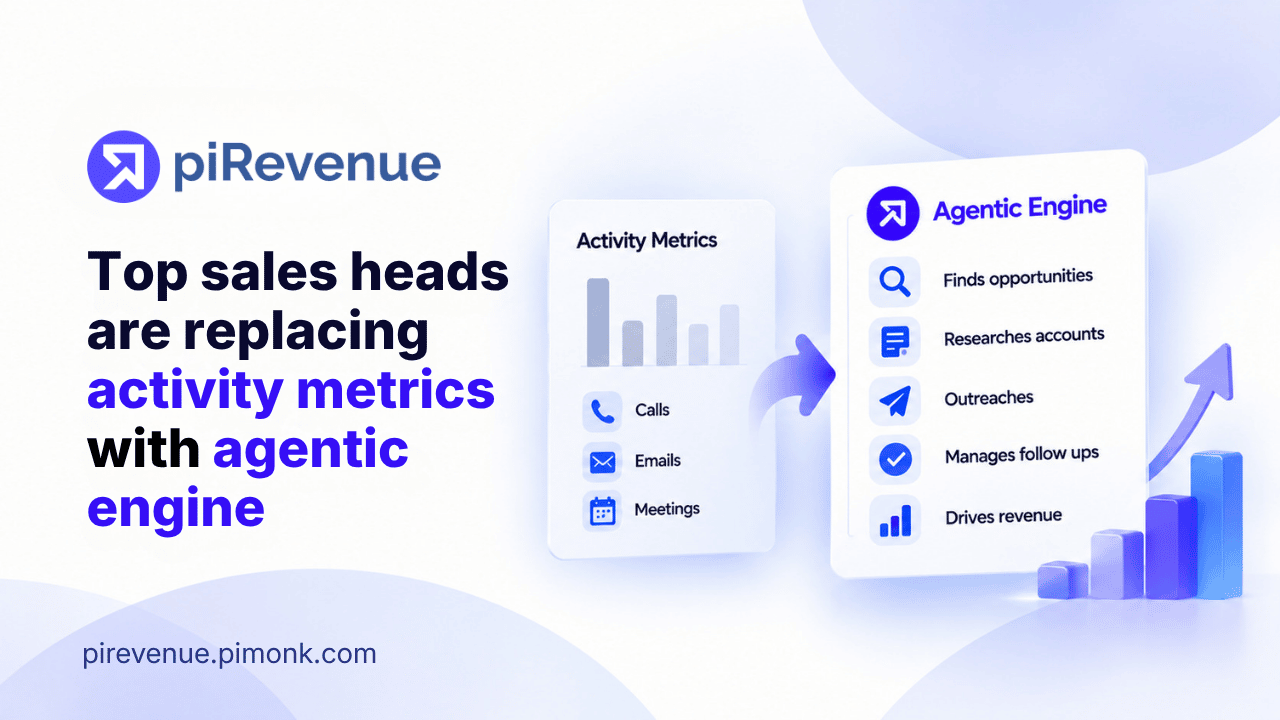
- Weeks five to eight: Run it and measure connect rate, meeting rate and pipeline created per account. Not dials. Remove dial targets from dashboards and comp plans in the same month.
- Weeks nine to twelve: Feed conversions back into the profile. Which accounts moved fastest, which stalled, and what they had in common. Adjust the target. Rebuild the list for the next quarter.
- Throughout: Let the agent layer do the research. Pre-call briefs, signal monitoring, contact verification. Reps should arrive at each call knowing why they are making it.
Conclusion
Dial volume is best read as a measurement of what the company does not know. Every dial past the point of a good list is a question the company failed to answer before handing the phone to a rep. Who fits. Who is ready. Who is worth the time. When those questions are answered, reps stop dialling and start selling. When they are not, reps dial, because dialling is the only way to find out.
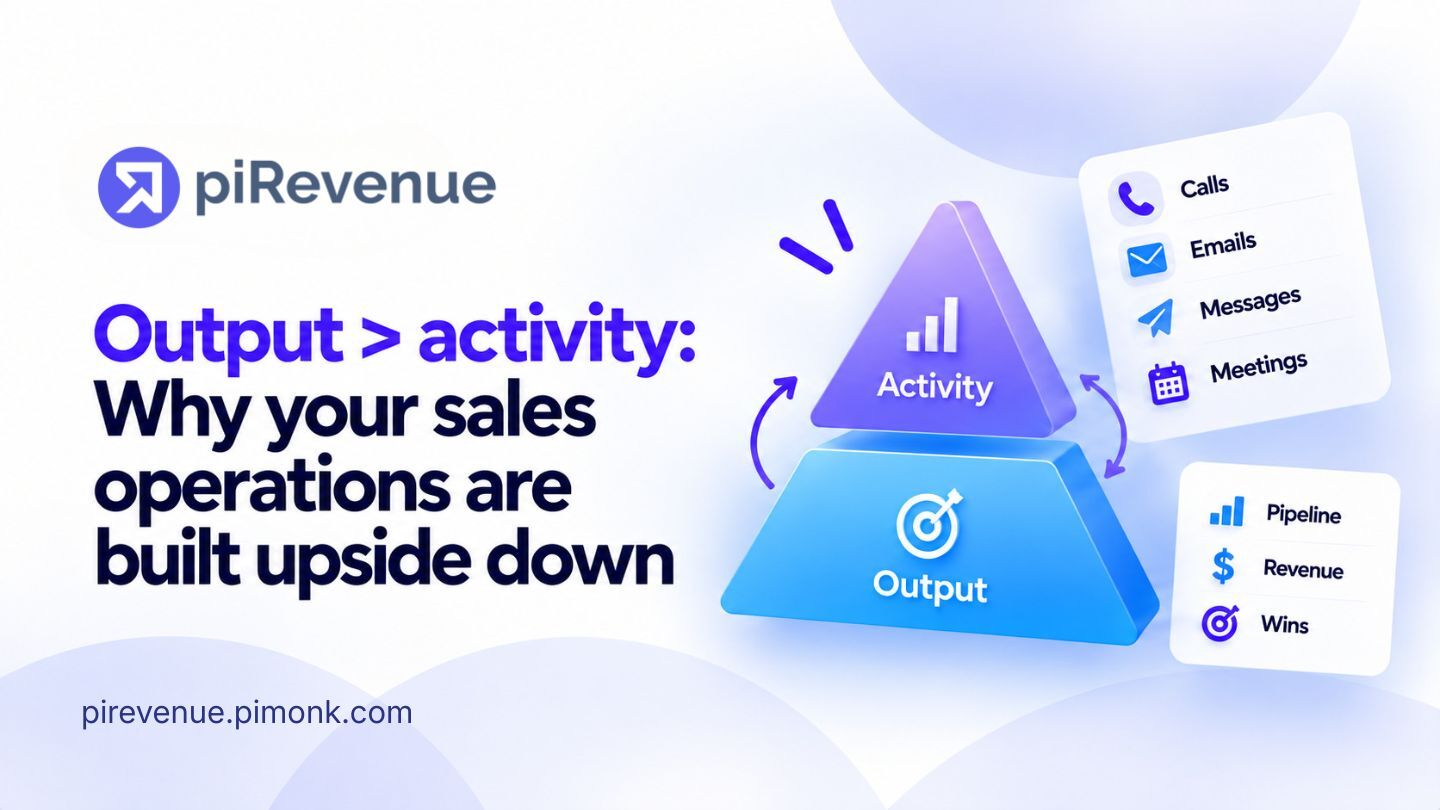
This makes dial count useful, but not in the way most dashboards use it. It is not a measure of effort. It is a diagnostic. A rising number means targeting is getting worse. A falling number, with conversion holding or rising, means targeting is getting better. Read it upside down, and it becomes one of the most honest numbers in the sales organisation.
There is one more thing. Targeting used to be expensive. Researching accounts, verifying contacts, and tracking signals took analyst time nobody had. So volume was a rational substitute. That excuse is gone. AI agents do the research in minutes, for every account, continuously. A team still dialling at volume in 2026 is not short of tools. It is short of a decision about who it sells to, and no amount of dialling will make that decision for it.
FAQs
1. Why does dial volume rise when sales targeting is weak?
A) Because reps compensate for uncertainty with effort. When the list is vague, and nobody has decided who's worth calling, reps dial everyone, doing the targeting management didn't do, one call at a time, at the most expensive point in the process.
2. What does a high-volume, low-conversion team actually tell a CEO?
Three things: the company hasn't decided who it sells to, the contact data is bad, and the incentives reward the wrong behaviour. None of these is a rep problem. They're upstream failures the reps are absorbing.
3. Where does sales targeting typically break down?
A) Six predictable places: a vague ideal customer profile, unverified bulk data, territories without account-level prioritisation, leads passed by form fill rather than fit, no use of intent signals, and no feedback loop from conversions back into the profile.
4. What does failed targeting actually cost per rep?
A) Far more than their salary line. A rep dialling unqualified lists produces meetings at $1,500 each. The same rep with a targeted list produces the same meetings at a quarter of the effort, plus better pipeline quality, lower attrition, and less wasted data spend.
5. Can targeting be fixed without new headcount?
A) Yes, within a quarter. Define the target as a decision, not a description; rebuild the list against it, assign accounts, not territories, remove dial targets from dashboards, and feed conversion data back into the profile. AI agents handle the research. The missing ingredient is a decision about who to sell to.