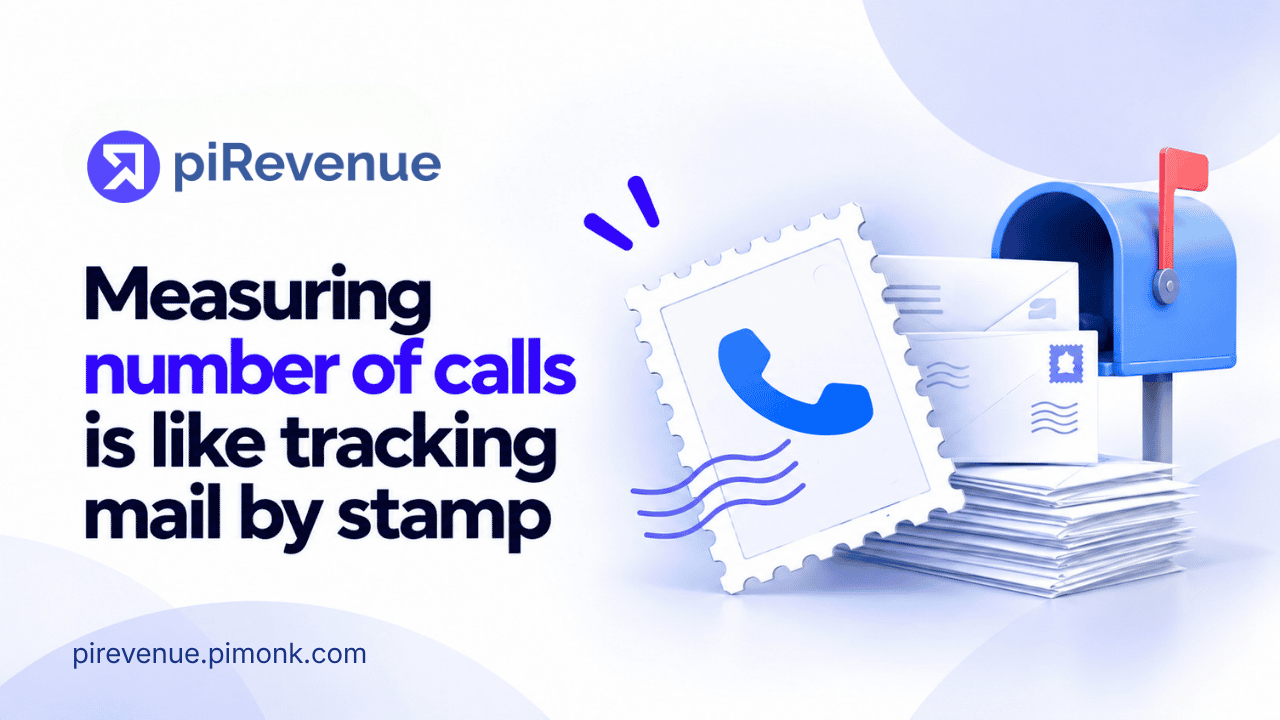
A stamp proves that a letter was sent. It says nothing about whether it arrived, whether it was opened, or whether anyone read it. A count of sales calls proves the same thing. The call was made. The dial went out. What happened after that, whether anyone answered, listened, or agreed to anything, is not in the number. And yet most sales organisations report on calls as if the count were the outcome. It is the stamp. The letter is somewhere else.
This post is for the sales heads, CFOs and CEOs who receive call reports every week and make decisions on them. It looks at what a call count actually proves, why leaders keep tracking it, what should be measured instead, which call metrics tell finance something real, and how a sales head can change the measure without losing control of the team.
What does a count of sales calls actually prove?
A count of 80 sales calls does not distinguish between a call that reached a decision-maker and one that reached a switchboard. It does not distinguish between a ten-minute discovery conversation and a four-second voicemail. It does not say whether the person called was a fit, whether they had a problem, or whether they will ever pick up again. Eighty calls could be eighty conversations. They could also be eighty unanswered rings. The number is the same.
This matters because the count is used as if it meant something. A rep with 80 calls is praised. A rep with 30 is questioned. But the rep with 30 may have had 20 real conversations, and the rep with 80 may have had two. The report does not know. The manager reading the report does not know. Decisions get made anyway.
The count also cannot be wrong, which makes it attractive. It is a fact. Eighty calls happened. But a fact that predicts nothing is not useful just because it is accurate.
Why do leaders still track sales calls this way?
Because the count was, for a long time, the only thing that could be tracked, and habits built around scarcity do not update when scarcity ends.
Twenty years ago, a manager could see the phone log and nothing else. Whether the call went well lived in the rep's memory. So the log became the measure. It was better than nothing. It was also understood by everyone who used it to be a rough proxy at best.
Then three things happened. Dialers made calls cheaper, so counts rose without conversations rising. Dashboards made the count easy to display, so it became the headline metric by default. And vendors built products that generated activity, so the metric they promoted was activity. The proxy hardened into a target, and the original understanding that it was only a proxy was lost.
Today, every call can be recorded, transcribed and analysed. Whether it reached a decision-maker, what was said, whether a next step was agreed, all of this is knowable. The count survives not because it is the best available measure but because it is the one already on the dashboard, and nobody has been asked to defend it.
What should be measured instead: sending or receiving?
A call has value when the person on the other end engages. They answer. They stay on. They share something about their situation. They agree to a next step. Each of these is a buyer action, not a rep action. The rep cannot manufacture them. A rep can make 200 calls a day. A rep cannot make 200 buyers agree to meetings.
This is the distinction that matters. Seller-side metrics measure effort. Buyer-side metrics measure interest. Effort can be inflated at will. Interest cannot. A dashboard built on effort will always show a busy team. A dashboard built on interest shows whether the busyness is working.
The shift is not complicated. Instead of asking "how many calls were made," ask "how many buyers responded, and how." Connects with the right person. Conversations that lasted long enough to matter. Next steps agreed. Meetings that were actually held. Every one of these is now captured by the systems where calls happen, without the rep entering anything.
The sales call count answers a question nobody needs answered. The buyer's response answers the only one that matters.
Which sales call metrics tell a CFO something real?
A short list. Each one is a buyer action, and each one can be tied to revenue.
- Decision-maker connect rate: Of all calls, what share reached someone with authority? Not a gatekeeper, not an assistant. This measures targeting quality and list accuracy together.
- Conversation rate: Of connects, what share became a conversation of meaningful length, defined by the company. Two minutes, five minutes, whatever the sale requires. This measures whether the opening works.
- Next-step rate: Of conversations, what share ended with an agreed action and a date. This measures whether the rep can move a buyer, which is the actual skill.
- Meeting-held rate: Of next steps, what share actually happened. No-shows reveal weak commitment. This measures whether the buyer meant it.
- Cost per held meeting: Rep cost divided by meetings that took place. This is the unit economics of the top of the funnel. A CFO can plan on it.
- Pipeline created per conversation: Value of opportunities opened divided by conversations held. This connects the call to money in one step.
How does a sales head change the measure without losing control?
Carefully, because managers who have run on call counts for years will feel the ground move. The transition that holds:
- Keep the count visible for one quarter, but demote it: Move it to a secondary view. Managers can still see it. It is no longer what the weekly meeting opens with.
- Introduce the buyer metrics alongside it: Connect rate, conversation rate, next-step rate. For four weeks, show both. Let managers see that the rep with the highest call count is often not the rep with the highest next-step rate.
- Change the coaching question: From "why were calls down?" to "why did conversations not turn into next steps?" The second question has an answer that improves the rep. The first does not.
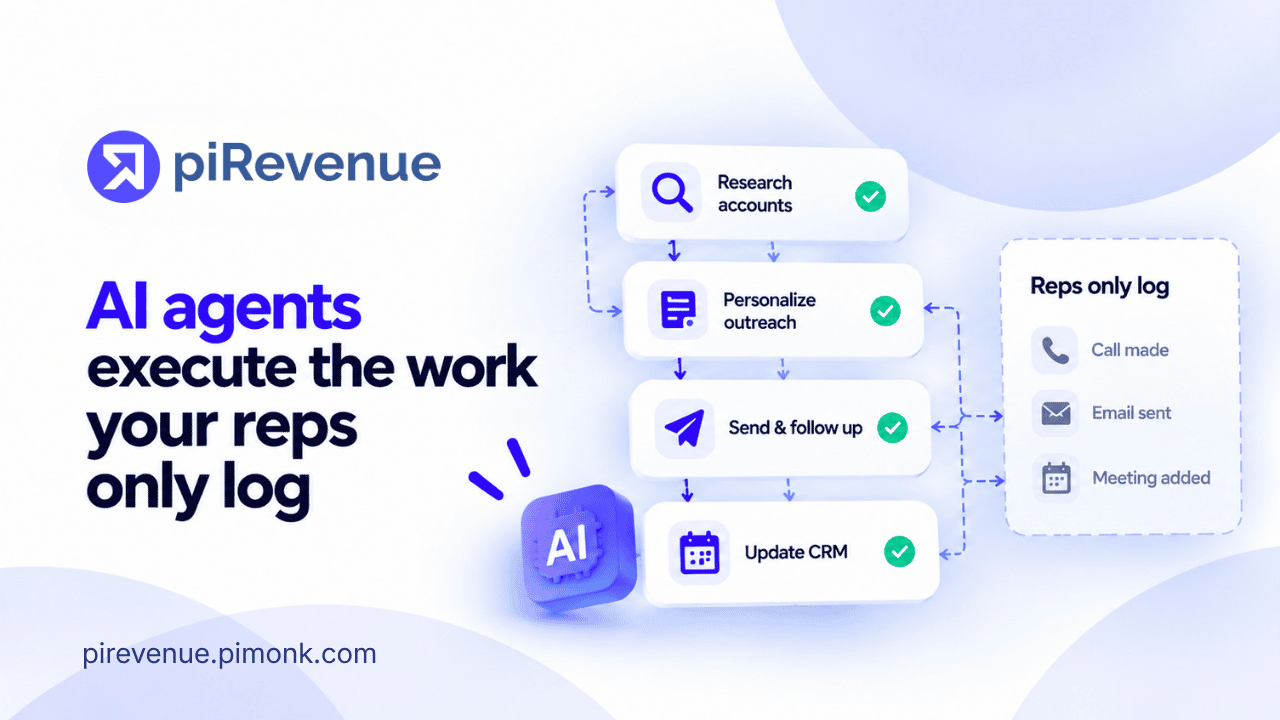
- Let AI capture everything: Call recording, transcription, and agents that log call connect, duration, sentiment and next step automatically. No rep should be entering call outcomes by hand. If they are, the data will be shaped, and the new metrics will inherit the old problem.
- Remove call targets from compensation in the same quarter: If pay still rewards dials, nothing else changes. Replace with held meetings or pipeline created.
- Set the floor on quality: A minimum next-step rate, not a minimum call count. Reps below the floor get coaching. Reps above it are left alone, whatever their volume.
Conclusion
Counting stamps made sense when delivery could not be seen. The letter went into the box and vanished. The stamp was the only evidence anyone had. That is not the situation any more. Every sales call now leaves a record of what happened on the other end. Whether it was answered, by whom, for how long, with what result. Delivery is visible. Tracking the stamp is a choice, and a poor one.
The deeper point is about who the metric belongs to. A count of calls belongs to the seller. It measures what the seller did. A count of responses belongs to the buyer. It measures what the buyer did in return. Only the second predicts revenue, because only the buyer decides to buy. Every sales dashboard that leads with seller activity is measuring the wrong party.
There is a reason this matters more now. Reps can make calls at any volume. AI can make them at unlimited volume. When the supply of calls is infinite, the count of calls is worth nothing. What remains scarce, and always will be, is a buyer who picks up, listens, and says yes to the next step. That is the metric. It was always the metric. The stamp was just easier to count.
FAQs
1. What does a call count actually prove?
A) That the rep pressed the button. It can't distinguish a real conversation from an unanswered ring, or a decision-maker from a switchboard. Eighty calls could mean eighty conversations or eighty voicemails; the number looks identical.
2. Why do leaders still track call volume?
A) Habit. When phone logs were the only available data, volume was the best proxy. Then dialers inflated counts, dashboards made the metric easy to display, and the understanding that it was only a rough proxy quietly disappeared.
3. What should replace call count on the dashboard?
A) Buyer-side metrics: connect rate with decision-makers, conversation rate, next-step rate, meeting-held rate, and pipeline created per conversation. None can be gamed by dialling more. All connect to revenue.
4. What's the one number a CFO should track?
A) Cost per held meeting. It captures targeting quality, list accuracy, and rep effectiveness in a single number finance can actually plan against.
5. How do you change the metric without losing team control?
A) Demote call count to secondary visibility for one quarter, introduce buyer metrics alongside it, change coaching questions from "why were calls down?" to "why didn't conversations convert?", and remove dial targets from compensation the same quarter.